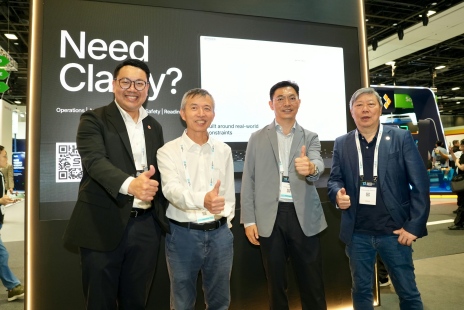
From November 4 to 6, the Singapore Urban Mobility Week 2026 (SUMW 2026) was held at the Suntec Singapore Convention & Exhibition Centre. The event was jointly organized by the Land Transport Authority of Singapore, MSI Global Pte Ltd, and MP Singapore, with support from the Ministry of Transport. Under the theme “Drive the Future-Autonomous Innovation, Smart Infrastructure, and Urban Mobility,” the event gathered urban mobility authorities, operating companies, and technology enterprises from the Asia-Pacific region and around the world, serving as a key regional platform for showcasing cutting-edge technologies and exchanging policy innovations.
The joint venture PCI-STRIDES Intelligent Mobility (PSIM) was invited to attend the event. PSIM representative Jeff Yu delivered a keynote presentation titled “Staying Ahead of Disruption--How Integrated Operations and Maintenance Create More Resilient Rail Networks,” sharing “how resilience is built” with government authorities, operating companies, and industry experts from multiple countries.
From “Observable” to “Self-Correcting”: There Are No Shortcuts to Resilience
Currently, urban rail O&M faces various challenges in technology, management, and maintenance, with traditional models relying heavily on post-event responses. To address this, it is significant to upgrade from “manual experience-driven” to “data- and AI-driven,” building an intelligent O&M system that is “observable, predictable, analyzable, and self-correcting.”
Drawing on practical experience, it is pointed that data governance is the primary key. Only with a solid foundation can upper-layer AI anomaly identification, root-cause analysis, and automated handling have reliable data sources. Data integration governance allows monitoring, maintenance, and operational data to build a chain of evidence. AI-powered hazard identification converts blind spots that are difficult for the human eye to cover into automated screening, while fault tree root-cause analysis advances from “fixed it” to “knowing why it broke.” This forms a complete causal chain of “data foundation → AI capability → resilient operations,” reducing the cost whenever a problem occurs.
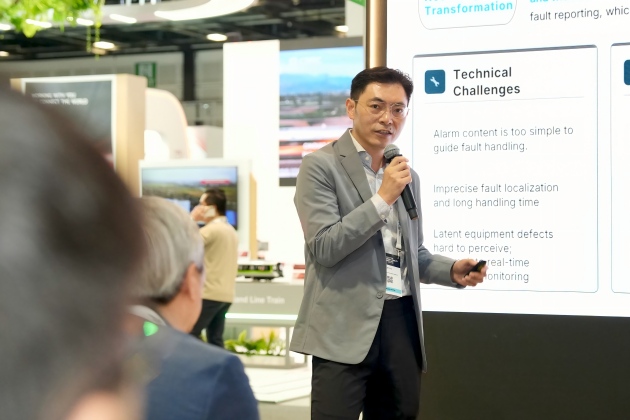
The sharing concluded by summarizing three industry consensuses on intelligent O&M transformation, namely data foundation first, AI model empowerment for business closed loops in typical scenarios, and alignment with operational production processes. It also reminded the industry to be wary of three major misunderstandings, platforms over data, algorithms over business, and one step to perfection while skipping maturity stages. The presentation called on peers to follow the laws of maturity evolution and steadily advance the construction of intelligent O&M for urban rail transit, providing the industry with a replicable and iterative methodology reference.
Looking Ahead to the Industry's Future and Jointly Building a New Intelligent O&M Ecosystem
The attendance of PSIM at SUMW 2026 not only reflects the company’s technological strength and international influence in the field of intelligent rail transit, but also serves as an important opportunity for in-depth dialogue with ecosystem partners in Southeast Asia. It contributes to promoting the intelligent development of global rail transit and building safer, more reliable, and more sustainable public transport systems.
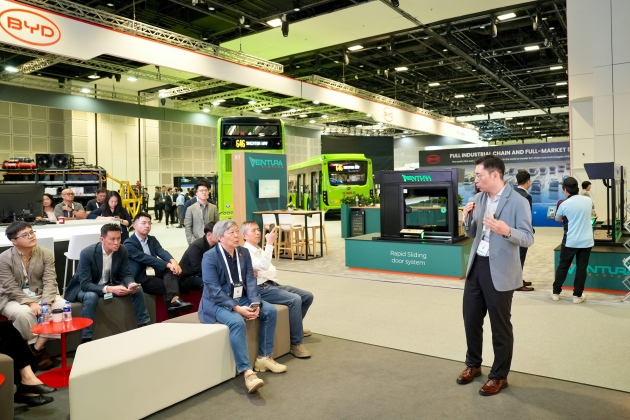
Looking ahead, PSIM will take SUMW 2026 as an opportunity to continuously deepen cooperation with rail transit operators and industry partners in Southeast Asia and the broader Asia Pacific region. The company will deeply integrate the intelligent O&M, systems integration, and lifecycle service experience accumulated across hundreds of rail lines in China with the actual operational needs of local markets. PSIM looks forward to sharing experience and tackling challenges together with global partners, providing solid support for the sustainable development of urban mobility in the Asia Pacific and around the world.


 Customer Service Hotline
020-85521717-0
Investor Service Hotline
020-85550260
Investor Service Email
ir@pcitech.com


Thank you for your message. We will contact you for the first time.


